Showing posts with label nature. Show all posts

Friday, September 18, 2015

Environmental and Animal rights Issues go Hand-in-Hand: Part 1

Hello!
Wow, it's been a long time since I last posted anything on this blog. However, I still am an animal rights activist, as I have been doing some offline activism over the past few months. Now I'm starting to think that perhaps it's time to get back to blogging... Hmm... Well, I'll finish writing this post first, and then decide. :)

(Just a side note: Guess how many pageviews my blog has gotten over "all time" by now? 35869! I'm so lucky to have the opportunity to help raise awareness in this way.) Now, onto today's topic...

Environmentalism and animal rights go hand-in-hand. If you are an environmentalist, you should be concerned about issues related to animals, and if you're an animal rights activist, it's important that you also care about the environment. Let me elaborate on both of these points, okay?

In part 1 of this two-part series, I'm going to talk about why environmentalists should care about animals, and why they should lead a vegan lifestyle.

Reasoning:
  • Wild animals: Wild animals are essential contributors to ecosystems all over the globe. If one wild species goes extinct, this could have a huge, cascading effect on the entire ecosystem. In order to preserve balance in Nature, animal species and populations must be protected from human exploitation.
  • Domesticated animals: The farming of animals is very inefficient, using up a lot of energy, land, and resources. Here are some shocking facts:
    • More than one third of all raw materials and fossil fuels used in the United States are used in animal farming.1
    • It takes more than 10 times the amount of fossil fuels to produce one calorie of animal protein than it does to produce one calorie of plant protein. What's more, "The world’s cattle alone consume a quantity of food equal to the caloric needs of 8.7 billion people—more than the entire human population on Earth". 1
    • 30% of Earth's land mass is now used to produce animal-derived "foods" (this includes the land that is used to grow feed for the animals, and grazing land).1 According to another source, 45% of Earth's total land is used for livestock.2
    • The amount of water it takes to produce a day's worth of food for a meat-eater is over 4000 gallons; for a lacto-ovo vegetarian, it takes 1200 gallons; and for a vegan, it takes only 300 gallons. 1
    • According to Vegan Outreach, "Expansion of livestock production is a key factor in deforestation, especially in Latin America where the greatest amount of deforestation is occurring – 70 percent of previous forested land in the Amazon is occupied by pastures, and feedcrops cover a large part of the remainder."3
    • Livestock farming accounts for 27% of the U.S.'s total methane emissions.4

These are merely a few of the facts. I found one website called "Truth or Drought" that provides an in-depth look at why plant-based diets are essential to fight water scarcity. Please check out the website at http://www.truthordrought.com/-- it looks very interesting!

And, according to a 2010 United Nations report, "Assessing the Environmental Impacts of Consumption and Production", only "a substantial worldwide diet change, away from animal products" would be able to significantly reduce impacts of agriculture worldwide. You can read the document itself, or you can see it reported in the Guardian: http://www.theguardian.com/environment/2010/jun/02/un-report-meat-free-diet.

Here's an infographic from Cowspiracy that provides even more information:


To those environmentalists who think, "Oh well, I'll just eat less meat in order to reduce my environmental impact, but not go vegan", please remember that animal agriculture is not only environmentally damaging, but it is also cruel beyond what most people can imagine, as well as inherently unethical because the animals' rights are being violated through exploitation. The only ethical solution is to go completely vegan. Veganism is easier than most people realize! There are lots of good sources of information on how to go vegan. You can download a free vegan started kit PDF from Physician's Committee for Responsible Medicine at http://www.pcrm.org/health/diets/vsk (the "Download" link is on the right-hand side of the page). Some other sources would include http://vegankit.com/be, http://veganoutreach.org/, or chooseveg.ca.

As you can see, becoming vegan is an important part of being an environmentalist. In part 2 of this series, I'm going to discuss why people who care about animal rights should also be concerned about the environment!


Sources of facts:
1. http://www.onegreenplanet.org/animalsandnature/facts-on-animal-farming-and-the-environment/
2. http://www.cowspiracy.com/facts/
3. http://www.veganoutreach.org/whyvegan/environment.html
4. http://extension.psu.edu/animals/dairy/nutrition/nutrition-and-feeding/diet-formulation-and-evaluation/carbon-methane-emissions-and-the-dairy-cow

Thursday, May 21, 2015

Four Things You Can Do To Help Protect Pollinators!

Hey there,
The Ontario Nature Youth Council has published a short video (2 minutes and 29 seconds) on Youtube outlining four things that you can do for pollinators in your community. Whether or not you live in Ontario, these strategies can help you to help pollinators!
Enjoy the video!
You can watch it on Youtube at: https://www.youtube.com/watch?v=JgZ-DLesdAU
Or, you can watch it below:


The Ontario Nature Youth Council has produced two videos recently on pollinators and our pollinator campaign. You can see the other video, about neonicotinoids and the ONYC's pollinator campaign, on Youtube at https://www.youtube.com/watch?v=FeIEwFPWwQk.

Monday, April 28, 2014

Join the "Thunderclap": Protect Ontario's Pollinators!

As a member of the Ontario Nature Youth Council, I would like to invite those of you who have Facebook, Twitter, and/or Tumblr to join the "Thunderclap" of messages that will be sent to Ontario Premier Kathleen Wynne calling for restrictions on the use of neonicotinoids (which are a particularly harmful type of pesticide) in Ontario, Canada. Neonicotinoids cause neurological damage to pollinators, such as bees and butterflies. This is one of the factors contributing to the massive deaths of much of the pollinator populations. To learn more, please go directly to the campaign page on the Thunderclap website: https://www.thunderclap.it/projects/11177-protect-ontario-s-pollinators.
You can visit Ontario Nature's website here: http://www.ontarionature.org/.

Photo Courtesy of http://www.ontarionature.org/protect/campaigns/pollinators.php
Thanks!

Sunday, July 14, 2013

Sable Island: A Wild Paradise for Once-Domestic Horses

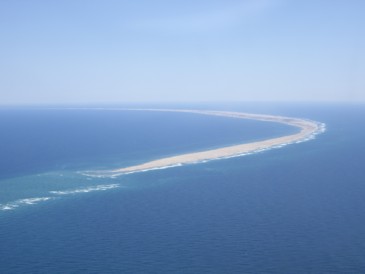
In the Canadian Maritimes, there exists a small island that is often shrouded in fog and plagued by storms. Once you reach it, however, you will be amazed by the wild beauty of the place: horses roaming free, seals swimming in peace, sand dunes sweeping the vista, and sky and water. There are a few human-made buildings, but very few people can be found there and it is generally wild. This island is called Sable Island.
I've almost always had a fascination with this mysterious isle. When I was a lot younger, I did a school project on it, and I've been determined to go there ever since. However, it  is rather difficult to obtain permission to get there-- too many humans visiting at once would unfortunately ruin the pristine beauty of the place. Eventually, however, I will find a way!

File:SableIsland1.jpg
Photo Courtesy of  HiFlyChick at en.wikipedia
The "wild" horses on Sable Island aren't actually wild. Technically, they're feral; their domesticated ancestors (probably mostly taken from Acadians when they were being deported from Nova Scotia) were shipped to the island in the 18th century, and now they live in nature. The humans who do live on or visit the island aren't allowed to touch the horses, and they don't feed them. They just live amongst each other. According to Zoe Lucas, a researcher who has worked and lived on the island for about 10 years,
"[B]ecause the horses are protected, have been protected for decades, there’s no reason for them to fear people. You can make them nervous by misbehaving, but if you just behave yourself, and watch their body language, and don’t disturb them, they’ll basically — they might look at you, and then go back to grazing. [...] I mean, it’s a treasure, right? — to be around wild animals and have them ignore you. That’s basically the ultimate experience: to have a wild animal not chase you, and not be afraid of you — that’s perfect." [Source: http://thechronicleherald.ca/novascotia/80216-work-fun-all-same-sable-island-researcher]
Some people say that our domesticated animals would go extinct if we stopped using them for our purposes. But really, is this true? Looking at the Sable Island horses, there seems to be a truly perfect human-horse relationship. Could that be accomplished with currently domestic horses and other animals, as well?
Perhaps it could. We would have to set aside a lot of land for national parks, etc., but-- in my opinion-- we need to do this anyway to preserve the environment. Humans should stop consuming as much on individual, workplace, and industrial levels, and we should try to be more self-sufficient. Then, perhaps, we might be able to live in natural harmony with animals, as well.
Even with cows we could do this. A major argument from meat-eaters is that all the cows would go extinct if we stopped eating them. But in truth, if humanity made the transition to a vegan lifestyle over a few years, even (because there is no way we can convince every human being on Earth to go vegan overnight), people would eventually realize that certain heritage breeds of cows were going extinct, and those ones would be set up on wildlife reserves. The species of cows who have been bred to be dependent on humans would probably be phased out, but by no means would ALL cows go extinct. The same goes for pigs, chickens, and more.


Photo Courtesy of HiFlyChick at en.wikipedia

Seals also live on the island:

Harbour seals basking on north beach
© Parks Canada: http://www.pc.gc.ca/eng/pn-np/ns/sable/visit/visit08.aspx


Sable Island has become a National Park in recent years, meaning that it will be protected for decades to come. It really gives me hope that humans, animals and nature will one day be able to live in harmony with each other! :)

To see some gorgeous pictures of the horses of Sable Island, check out this photographer's website:
http://www.sableislandhorse.com/feral-horses.html

To read first-hand accounts of visiting Sable Island, to contact Zoe Lucas, and more, please go to http://www.greenhorsesociety.com/!

Feel free to tell me what you think! I'm always excited to hear your comments. What do YOU think we can learn from Sable Island? If you've been there, what have been your experiences? Do you think we should try to live close to nature in the way they do at Sable Island?
For me, simply thinking about Sable Island enchants the mind and warms the spirit.

Have a good week, everyone... Come back next Sunday for my next post!